 By Laura Caiswell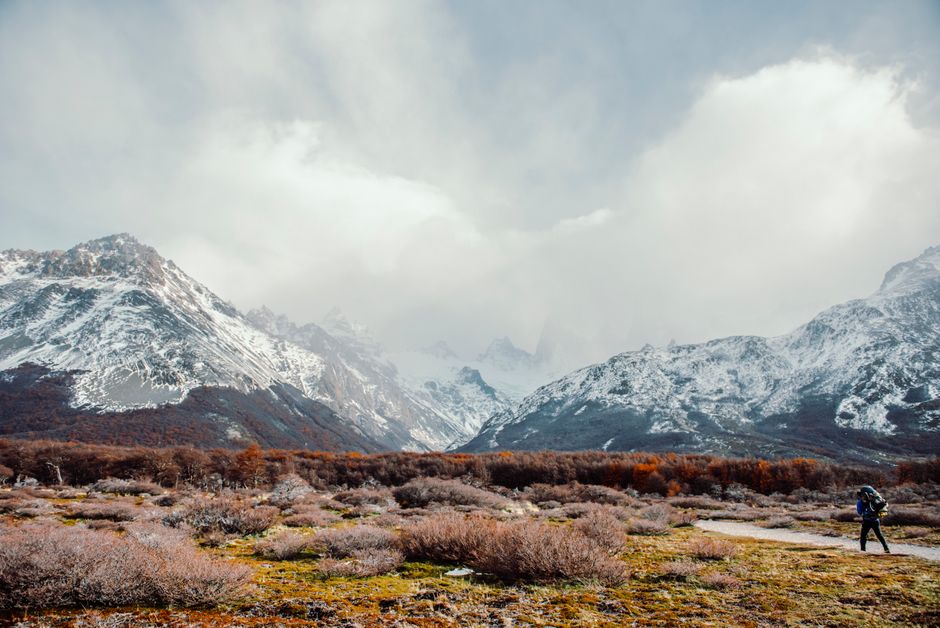
Wind speeds in Torres del Paine National Park routinely hit 120 km/h in July. I’ve watched a 25-pound backpack get lifted off the ground and thrown into a glacial lake. Packing for Patagonian winter isn’t about comfort—it’s about physics. You’re managing moisture, blocking wind, and trapping heat in a place where the weather changes three times before lunch.
Most packing lists you’ll find online read like an REI catalog threw up on a blog post. They recommend $3,000 worth of gear you’ll wear once. This isn’t that. This is the list of what I actually bring after three winter trips to Chilean and Argentine Patagonia, including the gear I’ve replaced, the mistakes I’ve made, and the one item I’d grab if my apartment was on fire.
The Real Layering System That Works Below 0°C
Forget the “base-mid-outer” mantra you’ve memorized. In Patagonia, your layering system collapses without two specific pieces: a wind-proof shell and a wicking base layer that dries in under 90 minutes. Everything else is negotiable.
Here’s the breakdown that’s survived 14-day treks around El Chaltén and the W Circuit:
| Layer | Material | Specific Item | Why Not the Alternative |
|---|---|---|---|
| Base (top) | Merino wool 200 g/m² | Icebreaker 200 Oasis Long Sleeve ($90) | Synthetic stinks by day 3. Cotton kills—literally. It holds 25x its weight in water and drops your core temp when wet. |
| Base (bottom) | Merino-synthetic blend 150 g/m² | Smartwool Classic Thermal Merino 150 ($100) | Pure merino bottoms wear through at the crotch in two trips. The blend adds durability without sacrificing warmth. |
| Mid (active) | Polartec Power Grid fleece | Patagonia R1 Air Full-Zip ($129) | Down is useless when you’re climbing and sweating. It clumps. Fleece breathes. The R1 Air dries in 45 minutes hung inside a tent. |
| Mid (static) | 800-fill goose down | Montbell Plasma 1000 Parka ($339) | You need a puffy for camp and long glassing stops. The Plasma packs to the size of a Nalgene and weighs 4.8 oz. No synthetic matches that compressibility. |
| Outer | 3-layer Gore-Tex Pro | Arc’teryx Beta AR Jacket ($600) | 2.5-layer jackets wet out in sustained Patagonian rain. The Beta AR’s 80-denier face fabric survives brush and rock scrapes that shred lighter shells. |
| Outer (bottom) | 3-layer Gore-Tex Paclite | Outdoor Research Foray II Pants ($199) | Full-side zips let you put them on over boots. Critical when a squall hits mid-hike and you have 90 seconds before you’re soaked. |
The static vs. active mid-layer distinction is the single biggest mistake first-timers make. You’ll overheat in a down jacket while hiking, then freeze at camp because your fleece can’t hold heat without a shell. Bring both. The combined weight is under 15 oz.
Why Cotton Is More Dangerous Than You Think
Cotton kills. That’s not hyperbole—it’s the first rule of backcountry medicine. Cotton absorbs 25 times its weight in water and loses all insulating properties when wet. In Patagonian winter, where humidity hovers above 80% and precipitation is measured in meters, wet cotton against skin drops core temperature three times faster than wet wool.
I saw a trekker evacuated from the French Valley in 2019 with early hypothermia. Temperature was -2°C. He was wearing a cotton t-shirt under a waterproof shell. The shell trapped his sweat, the cotton wicked nothing, and his core temp dropped to 35.1°C in under two hours.
Check every item on your packing list for cotton content. That includes underwear (cotton blends are common in “travel” boxers), socks (cotton athletic socks are a disaster), and even your buff. Synthetics or merino only. Exceptions: none. I don’t care if it’s “just for the bus ride.” The bus from Punta Arenas to Puerto Natales breaks down. It gets cold. You sit there for three hours. That cotton t-shirt becomes a liability.
Footwear: One Boot System vs. Two-Shoe Quiver
I’ve tried both approaches. The two-shoe system—heavy waterproof boots plus camp shoes—adds 2.5 pounds to your pack. The one-boot system leaves you in wet socks at camp.
Here’s my current setup after testing five combinations across 200+ trail miles:
- Primary boot: Scarpa Kailash Trek GTX ($280). Full-grain leather, Gore-Tex liner, crampon-compatible heel bail. These have 400g of insulation and don’t wet out in knee-deep snow. I sized up a full size to accommodate two pairs of socks without restricting circulation—critical below -5°C.
- Camp shoe: Exped Camp Bootie ($59). Synthetic insulation, weighs 8.2 oz for the pair, packs flat. Not a “nice to have.” When your boots are frozen solid at 6 AM, you need something on your feet to make coffee.
- Sock system: Darn Tough Mountaineering Micro Crew ($28/pair) over Injinji Liner Crew toe socks ($14/pair). The liner wicks moisture and prevents blisters between toes—a problem that ends trips when you’re doing 12-mile days. Bring three liner pairs, two outer pairs. Rotate. Dry the off-pair inside your sleeping bag.
Skip trail runners. I know the ultralight community loves them. They don’t work in Patagonian winter. The trails are mud, snow, and ice. Your feet will be wet and numb within an hour. I watched a guy in Altra Lone Peaks turn around on the Las Torres trail because he couldn’t feel his toes.
Sleep System: The 10-Degree Buffer Rule
Whatever temperature rating your sleeping bag claims, subtract 10 degrees. That’s your actual comfort limit. Bag ratings assume you’re wearing a base layer, using an insulated pad, and sleeping in still air. Patagonia gives you none of those guarantees.
My current sleep system for winter:
- Sleeping bag: Western Mountaineering Versalite 10°F ($735). 850-fill down, 2 lbs total. Yes, it’s expensive. It’s also the last bag you’ll buy. The continuous baffle design prevents cold spots that plague cheaper bags.
- Sleeping pad: Therm-a-Rest NeoAir XTherm NXT ($260). R-value 7.3. This is non-negotiable. R-values under 5 mean you’re losing body heat to the frozen ground all night. I pair it with a closed-cell foam pad (Therm-a-Rest Z Lite Sol, $48) underneath for R-value stacking and puncture protection.
- Liner: Sea to Summit Reactor Extreme ($70). Adds 15°F to your bag’s rating and keeps body oils off the down. I use it as a standalone bag in heated refugios.
Failure mode: Compressed down doesn’t insulate. If you store your sleeping bag in a compression sack during the day, it loses loft permanently over a two-week trip. Use a loose stuff sack or pack it last, letting it fill empty space in your pack.
Electronics and Navigation in the Cold
Lithium-ion batteries drain 40% faster below freezing. Your phone will die mid-hike if it’s in an exterior pocket. Your power bank will be a paperweight by day three if you don’t manage it.
My electronics kit:
- Phone: Whatever you own, in a waterproof case. Store it in an interior chest pocket against your body heat. I use a Loksak aLoksak bag ($12 for a 3-pack) as a vapor barrier.
- Power bank: Nitecore NB10000 Gen 3 ($60). 10,000 mAh, 5.3 oz. The carbon fiber shell sheds heat better than aluminum. Keep it in your sleeping bag at night.
- Navigation: Garmin inReach Mini 2 ($400). Satellite texting and SOS. Cell service doesn’t exist on the W Trek or most of El Chaltén’s trails. This isn’t optional for solo hikers. The subscription is $15/month for a basic safety plan.
- Headlamp: Petzl Actik Core ($70). Rechargeable battery with USB-C, plus AAA compatibility as backup. 600 lumens. Red light mode preserves night vision and battery.
Leave the drone at home. They’re banned in Torres del Paine and most Argentine national parks. Rangers confiscate them.
What I’d Pack Differently Next Time
After three trips, my packing list has shrunk by 40%. The biggest cuts came from realizing what Patagonia provides naturally and what I was carrying out of fear.
Items I no longer bring:
- Water filter (streams above treeline are potable; below treeline, boil for 1 minute)
- Camp towel (a buff works fine, dries faster)
- Third mid-layer (fleece + puffy covers all conditions)
- Rain pants with no side zips (you’ll never put them on in time)
- Paperback book (Kindle app on phone, battery management above)
Items I added after my first trip:
- Second pair of liner gloves (first pair is always wet by lunch)
- Zippo hand warmer ($25, runs on lighter fluid, lasts 12 hours)
- Tenacious Tape ($8) for shell repairs
- Spare sunglasses (lost mine to a gust on Laguna de los Tres)
The biggest packing mistake isn’t bringing too little. It’s bringing too much of the wrong thing and not enough of the right thing. Every gram in your pack should earn its place by solving a specific Patagonian problem: wind, wet, cold, or dark. If an item doesn’t address one of those four, it stays home.