 By Laura Caiswell
Portugal hit 30 million visitors in 2026. Nearly 80% of them crammed into Lisbon, Porto, and the Algarve’s southern strip. I’ve spent six weeks zigzagging the country on a $62/day budget, and here’s the uncomfortable truth: the Portugal tourists rave about is a different country than the one locals actually love.
The real Portugal costs half as much. The food tastes better. Nobody’s elbowing you for a photo. These ten towns aren’t “up-and-coming”—they’ve been perfect for centuries. You just haven’t heard of them yet.
The Cost of Following the Crowd
A pastel de nata in Lisbon’s Baixa district now runs €2.50. In Monsanto, you’ll pay €0.80. A decent double room in Porto’s Ribeira during shoulder season? €140 minimum. In Piódão, €55 gets you a stone cottage with a fireplace and mountain views that beat any postcard.
This isn’t about being cheap. It’s about value density—how much authentic experience you extract per euro spent. The math is brutal for mainstream destinations now.
| Expense | Lisbon/Porto (2026 avg) | Hidden Gem Towns (2026 avg) |
|---|---|---|
| Double room (mid-range) | €120-180 | €50-80 |
| Dinner for two (with wine) | €45-70 | €20-35 |
| Daily car rental | €35-55 | €25-40 |
| Entry fees (castles, museums) | €8-15 | €0-5 |
| Coffee and pastry | €3.50-5 | €1.20-2 |
Bottom line: A week in hidden-gem Portugal costs roughly what four days in Lisbon costs. And you’ll eat better, sleep deeper, and actually hear Portuguese spoken around you.
Monsanto: The Town That Refuses to Be Flat
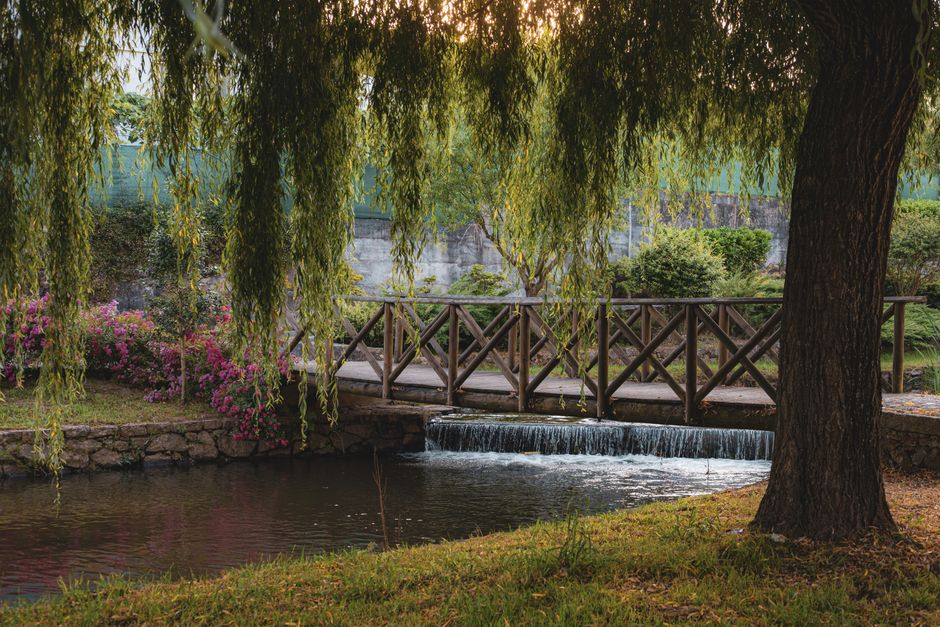
Giant granite boulders crush houses here—and people built around them. Monsanto sits in central Portugal near the Spanish border, and it’s the most visually absurd place I’ve ever slept. Houses wedge themselves under 200-ton rocks. Narrow stone paths twist at angles that make no engineering sense.
This isn’t a museum. Roughly 800 people live here year-round. Dona Maria at Taverna Lusitana serves cabrito assado (roast kid goat) for €11, and she’ll tell you which boulder crushed her grandfather’s shed in 1974.
Mistake to avoid: Visiting as a day trip. Monsanto empties out by 5pm when the tour buses leave. Stay overnight at Casa da Tia Piedade (€65/night, breakfast included). The boulder-lit silence at 10pm is the whole point.
Tavira: The Algarve Without the Chaos
The Algarve’s western and central coasts have become a concrete parade of resorts and English breakfast signs. Tavira, 30km east of Faro, refuses to play that game. It sits on the Gilão River with a Roman bridge, 37 churches, and a ferry that takes you to Ilha de Tavira—an 11km barrier island with sand so fine it squeaks underfoot.
Most tourists skip eastern Algarve entirely. Their loss.
Stay at Pousada Convento de Tavira, a converted 16th-century convent (rooms from €95). Eat at À Mesa for €14 cataplana—the seafood stew that defines Algarvian cooking but gets ruined at tourist traps further west.
When NOT to choose Tavira: If you want nightlife. The town goes quiet after 11pm. For party energy, you’d hate it here. For everything else, it’s the Algarve adults have been searching for.
Piódão: Portugal’s Slate Village
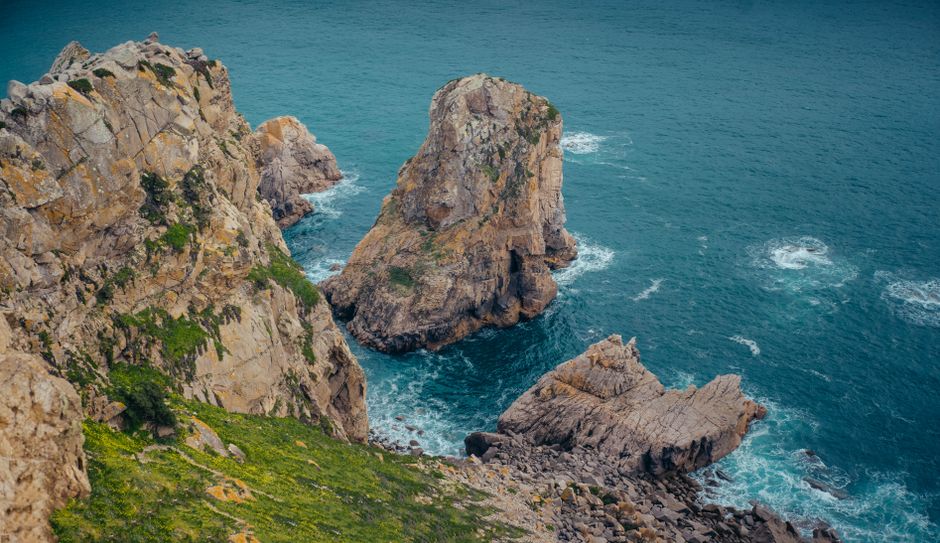
Everything in Piódão is schist. Walls, roofs, streets, steps—all the same blue-grey stone, stacked impossibly into a mountain valley in the Serra do Açor. It looks like a film set for a medieval fantasy, except it’s real and has been here since the 12th century.
The drive in takes 40 minutes of hairpin turns from the nearest town. That’s the filter. No tour buses fit on these roads.
There’s one restaurant, one small museum, and a church with electric-blue interior lighting that somehow works. Casa do Alqueve (€55/night) has two rooms and a host who leaves fresh bread at your door by 7am. No Wi-Fi. Deliberately.
- Best month: October—the chestnut forests turn gold and the summer haze lifts
- Hike: The PR1 AGN trail to Foz d’Égua (4.2km, moderate, waterfall endpoint)
- Fail point: Zero ATMs within 20km. Bring cash.
- Verdict: Best two-night reset in continental Portugal
Óbidos Is Famous. You’re Still Doing It Wrong.
Yes, Óbidos gets tourism. The walled medieval town an hour north of Lisbon appears on plenty of itineraries. But 90% of visitors arrive at 11am, walk the main street, buy cherry liqueur in a chocolate cup, and leave by 2pm.
The town transforms after dark. The day-trippers vanish. The walls glow under lantern light. You can walk the entire 1.5km circuit of the castle ramparts with nobody else up there—something impossible at noon.
Book a room inside the walls at Casa das Senhoras Rainhas (€110/night). The restaurant has a €18 leitão (suckling pig) that rivals Bairrada’s famous version. Wake at 7am and you’ll have the entire town to yourself for two hours.
The real mistake: Treating Óbidos as a checkbox. It’s a two-night town disguised as a half-day stop.
Azenhas do Mar: 30 Minutes From Sintra, Worlds Apart
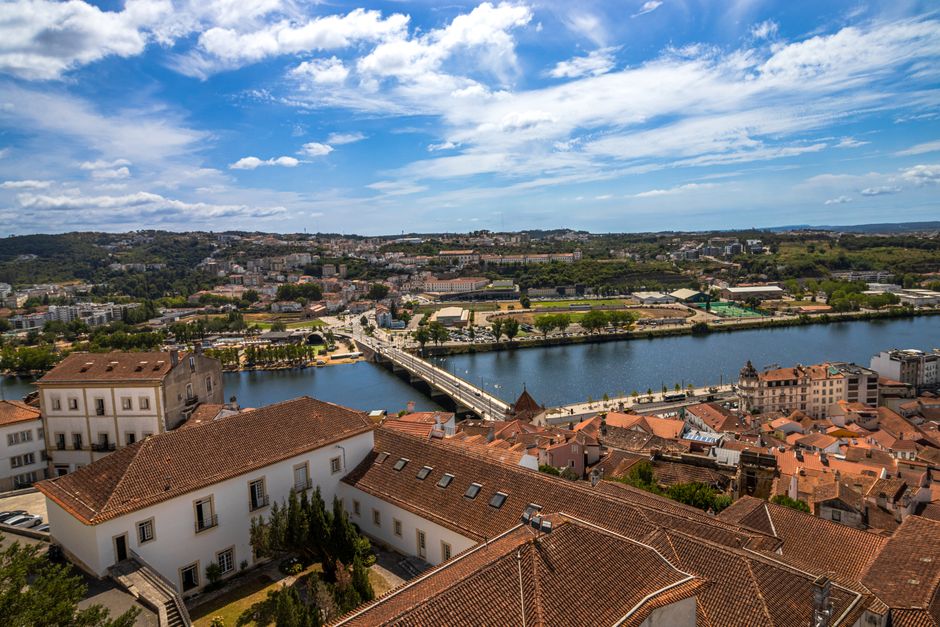
Sintra’s overtourism problem is now chronic—3 million visitors annually in a town built for 30,000. While everyone queues for Pena Palace, drive 30 minutes northwest to Azenhas do Mar.
It’s a whitewashed fishing village stacked dramatically on a cliff above a natural ocean pool. The pool fills with seawater at high tide and is free to use. Restaurant Azenhas do Mar hangs over the cliff edge and serves grilled sea bass for €16 with a view that would cost €200 in Amalfi.
This isn’t a full-day destination. It’s a lunch stop. But it’ll be the best lunch of your trip.
Marvão: The Eagle’s Nest
Marvão sits 860 meters up on a granite escarpment in the Alentejo, so high that clouds sometimes form below the castle walls. The 13th-century fortress offers a 360-degree view into Spain on clear days.
The village inside the walls has roughly 100 residents, two restaurants, and a silence so complete you can hear swallows’ wings from 30 meters away. Pousada de Marvão (€85/night) occupies converted medieval houses. Room 7 has a window that faces the sunrise over the Spanish plains.
Failure mode: Visiting in July-August without booking accommodation. There are fewer than 20 rooms inside the walls. Book six weeks ahead for summer.
Costa Nova: Striped Houses and Empty Beaches
An hour south of Porto, Costa Nova’s candy-striped houses—palheiros, originally fishermen’s storage sheds—now serve as holiday homes painted in red, blue, yellow, and green vertical stripes. Instagram found it, but weekdays from September to May remain quiet.
The beach stretches 15km of firm golden sand. The Atlantic here is cold (17°C in summer) and rough—not a paddling beach. But for long walks and seafood, it’s exceptional. Restaurante Dori serves arroz de marisco (seafood rice) for €13 per person, portions big enough for two.
Skip if: You want warm swimming water. Head to Tavira instead. Costa Nova’s water temperature maxes at 19°C even in August.
Sortelha: One Street, Zero Gift Shops
Sortelha makes Óbidos look like Times Square. This medieval granite village near the Spanish border has one cobbled street, 30 permanent residents, and a 13th-century castle you can climb for free. Nobody sells souvenirs. No restaurant has an English menu.
Domínio da Sortelha (€70/night) is a four-room guesthouse built into the old walls. The owner, Sr. António, serves breakfast on a terrace facing the Cova da Beira valley. He’ll tell you about the wolf that was spotted near the castle in 2026—with genuine concern that you might think he’s exaggerating.
This is Portugal at its most unpolished. If you need curated experiences and multilingual guides, Sortelha will frustrate you. If you want to feel like you’ve discovered something, there’s nowhere better.
Monsaraz: Alentejo’s Balcony
Monsaraz overlooks Europe’s largest artificial lake, the Alqueva, from a fortified hilltop in the Alentejo. The whitewashed schist-and-lime village is so uniformly bright that midday sun makes you squint hard.
This is dark-sky territory. The Alqueva region earned a Starlight Tourism certification—the first in the world. On moonless nights, the Milky Way casts a visible shadow. The observatory at Cumeada runs €10 nighttime sessions with proper telescopes.
Eat at Sem-Fim, a restaurant-gallery in a former olive oil mill. The €22 tasting menu includes black pork cheeks slow-cooked in local red wine. Dom Nuno Guesthouse (€75/night) has a rooftop terrace perfect for stargazing.
Comporta: The Secret That’s Not So Secret Anymore
Comporta sits on the Tróia Peninsula an hour south of Lisbon. It’s been “discovered”—Christian Louboutin and Madonna own properties nearby—but it still operates at one-tenth the intensity of the Algarve. The beaches (Praia da Comporta, Praia do Pego) run for miles of white sand backed by rice fields and umbrella pines.
Prices are higher here than elsewhere on this list. A room at Sublime Comporta starts at €200. But the beach restaurants—Ilha do Arroz, Comporta Café—serve grilled fish for €15-20 with your feet in the sand.
Tradeoff: Comporta costs more but delivers the rare combination of wild Atlantic beaches and sophisticated food. If budget is your primary filter, swap Comporta for Costa Nova and save 40%.
How to Actually Do This Trip
Portugal’s hidden gems share one constraint: public transport ranges from infrequent to nonexistent. You need a car. Rentals from Lisbon airport start at €22/day for a manual Fiat 500 through local agencies like Luzdrive or Auto Jardim—skip Hertz and Europcar, which charge 60% more for the same vehicle.
The ideal route loops from Lisbon: north to Óbidos, inland to Monsanto and Sortelha, up to Piódão, then down through Marvão and Monsaraz, across to Tavira, and back up the coast via Comporta and Costa Nova. Two weeks minimum. Three is better.
Portugal’s interior empties out between November and March. Accommodation prices drop another 30%. The light turns golden and low. For my money, February is the single best month to do this trip—almond blossoms in the Alentejo, empty roads, and restaurant tables available without reservations.