 By Laura Caiswell
Last March I booked a one-way from Los Angeles to Tokyo for $187. The same route, same week, on Google Flights showed $540. The difference wasn’t luck. It was a specific set of booking rules I’ve built over six years of flying to Asia 3-4 times annually. No incognito mode. No Tuesday-at-3am nonsense.
Most “cheap flight” advice is recycled garbage. Clearing cookies does nothing. Waiting for Tuesday doesn’t work. What actually works is understanding how airlines price Asia routes, where the hidden inventory lives, and when to ignore the tools everyone else uses.
Here’s what I actually do, with real numbers from real bookings in 2026 and early 2026.
The One-Way Split Method: Why Round-Trip Thinking Costs You Hundreds
Most travelers search for round-trip tickets by default. That’s the first mistake. Airlines price round-trips differently than two one-ways, and on Asia routes, the difference can be massive.
For example, a round-trip from New York (JFK) to Bangkok (BKK) on a single ticket might run $1,100. But two separate one-ways — JFK to Tokyo (NRT) on ZipAir for $280, then Tokyo to Bangkok on AirAsia for $95 — total $375 each direction. That’s $750 round-trip. Same journey, $350 saved.
The reason is simple: full-service carriers like Singapore Airlines and Japan Airlines price round-trips as a premium product. Budget carriers like ZipAir, Scoot, and Cebu Pacific sell one-ways at razor-thin margins. Mixing them means you capture the cheapest segment price for each leg.
How to Execute the Split
Start with Google Flights. Search your origin to your final destination as a one-way. Note the cheapest single-ticket price. Then search your origin to major Asian hubs — Tokyo (NRT/HND), Seoul (ICN), Taipei (TPE), Singapore (SIN), Bangkok (BKK) — as separate one-ways. Then search those hubs to your final destination on budget carriers.
I use Skyscanner’s “Everywhere” search for the second leg. It shows you which hub-to-destination routes are cheapest on any given date. The tool is free and doesn’t require an account.
When This Doesn’t Work
If you’re checking bags, the split method gets complicated. Budget carriers charge $30-60 per checked bag per segment. Two checked bags across four segments can add $240. At that point, a single round-trip on a full-service carrier with free bags might actually be cheaper. Do the math before you commit.
Bottom line: For carry-on-only travelers, the one-way split method consistently beats round-trip pricing by 20-40% on Asia routes. For checked-bag travelers, it’s only worth it if the base fare gap exceeds $200.
Positioning Flights: The $40 Domestic Hop That Unlocks $300 in Savings

Your home airport is probably the problem.
I live in Denver. A direct Denver to Tokyo flight is routinely $900+. But a positioning flight from Denver to Los Angeles costs $40-60 on Frontier or Southwest. From LAX, the same Tokyo flight drops to $450-550. Total: $510-610. I save $300+ just by adding a domestic leg.
The major Asia departure gateways in the US are:
| Gateway Airport | Why It’s Cheaper | Typical Savings vs. Regional Airport |
|---|---|---|
| Los Angeles (LAX) | Highest competition: ZipAir, Singapore, ANA, JAL, Delta, United all compete here | $200-400 |
| San Francisco (SFO) | United hub + ANA/JAL/EVA competition | $150-350 |
| Seattle (SEA) | Closest US gateway to Tokyo/Seoul; Delta and ANA both run routes | $100-300 |
| Vancouver (YVR) | Often overlooked; Air Canada and ANA price aggressively | $150-400 |
| Honolulu (HNL) | Midpoint stopover; budget carriers like ZipAir fly HNL-NRT for under $200 | $200-500 |
Positioning flights add complexity. You need to build in buffer time — I book the positioning flight at least 6 hours before the international departure, ideally the night before. A missed connection on separate tickets means you eat the cost of the international leg. That’s the risk.
Bottom line: If your home airport is not LAX, SFO, SEA, or YVR, you are almost certainly overpaying. A $50 positioning flight is the single highest-ROI move in cheap Asia travel.
ITA Matrix: The Tool Airlines Don’t Want You to Use
Google Flights is fine for casual searches. But it hides things. It rounds prices. It omits certain fare codes. It doesn’t show you the raw fare construction.
ITA Matrix (matrix.itasoftware.com) is the backend tool that Google Flights was built on. It’s free, it’s ugly, and it’s the most powerful flight search tool available to the public. Airlines use it internally for fare research.
What ITA Matrix shows you that Google Flights doesn’t:
- Fare codes and booking classes — you can see exactly what fare bucket you’re buying, which matters for upgrades and mileage earning
- Advanced routing codes — force the tool to route through specific cities or exclude specific airlines
- Calendar of fares for an entire month — not just the 5-day window Google shows
- Multi-city pricing without markup — Google sometimes inflates multi-city quotes
The catch: ITA Matrix doesn’t sell tickets. You find the fare, note the exact flight numbers and dates, then book directly on the airline’s website. The price should match. If it doesn’t, call the airline and give them the fare construction code.
I use ITA Matrix for one specific purpose: finding mistake fares and unadvertised sales. Airlines occasionally file fares with missing fuel surcharges or incorrect routing rules. These show up in ITA Matrix before they hit Google Flights. The $187 LAX-Tokyo fare I mentioned earlier? Found on ITA Matrix at 2am on a Tuesday. Booked immediately. Gone by morning.
Budget Carriers to Asia: What You Actually Get for $200
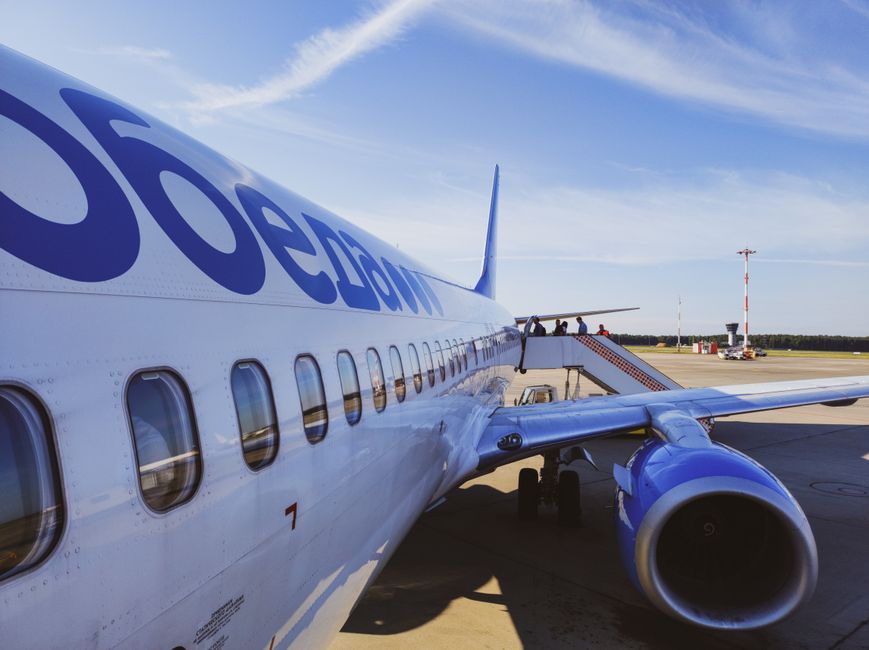
ZipAir is the most interesting airline in the Pacific right now. It’s Japan Airlines’ budget subsidiary, and it flies 787 Dreamliners on routes like LAX-NRT, SFO-NRT, and HNL-NRT. Base fares start around $200-280 one-way. That’s not a typo.
What you give up: seat selection costs $10-30, checked bags cost $40-70, meals cost $8-15, and there’s no free entertainment. What you get: a clean, modern 787 with 31-inch seat pitch (same as many full-service carriers’ economy), Japanese service standards, and JAL’s maintenance record.
Other budget options:
- Scoot (Singapore Airlines subsidiary): Flies from the US West Coast to Singapore via Tokyo and Taipei. Base fares from $250 one-way. Older 787s, tighter seats.
- Cebu Pacific: Best for intra-Asia hops. Manila to Tokyo, Seoul, Singapore for $40-80 one-way. Not a trans-Pacific option from the US.
- AirAsia: The Ryanair of Asia. Dirt cheap intra-Asia flights. $20-60 one-way between major cities. Watch the add-on fees — they’re aggressive.
The honest tradeoff: budget carriers are fine for flights under 8 hours. For 10+ hour trans-Pacific legs, the lack of included meals, water, and recline gets old. I’ve done LAX-NRT on ZipAir three times. It’s tolerable. But I wouldn’t do it with kids or if I needed to work on arrival.
Bottom line: ZipAir is the best budget trans-Pacific option in 2026. Scoot is a solid second. Both beat full-service carriers on price by 50-60% on identical routes.
Q&A: The Questions Everyone Gets Wrong About Asia Flights

Does incognito mode actually help?
No. There is zero evidence that airlines raise prices based on your browsing history. Prices change because fare buckets sell out and algorithms adjust in real time. Incognito mode changes nothing about how the airline’s inventory system works. If you want to test this, search the same route in incognito and normal mode simultaneously. The prices will match 99% of the time. The 1% difference is fare bucket churn, not cookie tracking.
When is the cheapest time to book a flight to Asia?
For trans-Pacific routes, the sweet spot is 3-5 months before departure for peak season (December-January, March-April cherry blossom, July-August). For shoulder season (May-June, September-November), you can often find deals 4-8 weeks out. The old “book 6 months ahead” advice is outdated. Airlines now use dynamic pricing that rewards late bookings on undersold flights. I booked a September 2026 SFO-Singapore flight 3 weeks out for $390 on United. Six months out, that same flight was $780.
Should I use a VPN to book from a different country?
Occasionally, yes. Some airlines price differently based on point of sale. ANA and JAL sometimes show lower fares when booked from their Japanese sites. But the savings are usually $20-50, not hundreds. And you need a Japanese payment method for some of those fares. The hassle usually isn’t worth it unless you’re already booking through a Japanese proxy service.
Are mistake fares real?
Yes, but they’re rare and they get cancelled sometimes. Airlines are not legally obligated to honor mistake fares in most countries. If you book a $87 round-trip to Tokyo, the airline might cancel it and refund you. It happens. The best strategy for mistake fares: book directly with the airline, don’t call them to “confirm” (that’s how you get it cancelled), and wait at least 2 weeks before booking hotels or other non-refundable items. Sites like Secret Flying and The Flight Deal track mistake fares, but they’re usually gone within hours.
What’s a realistic cheap price for a flight to Asia in 2026?
From the US West Coast: $350-500 round-trip to Tokyo, Seoul, or Taipei is a good deal. $250-350 is excellent. Under $250 is a mistake fare or a very specific sale. From the US East Coast: $600-800 round-trip is good. $450-600 is excellent. From Europe: $400-600 round-trip to Bangkok, Singapore, or Kuala Lumpur is good. These numbers assume economy, carry-on only, 1-2 stops max.
Bottom line: The biggest mistake is searching for “cheap flights to Asia” generically. Pick a specific route, use ITA Matrix to find the fare floor, and book when you see a price in the bottom 20% of the historical range. Hopper’s price prediction tool is decent for this — it shows you whether current prices are above or below average for your route.