 By Laura Caiswell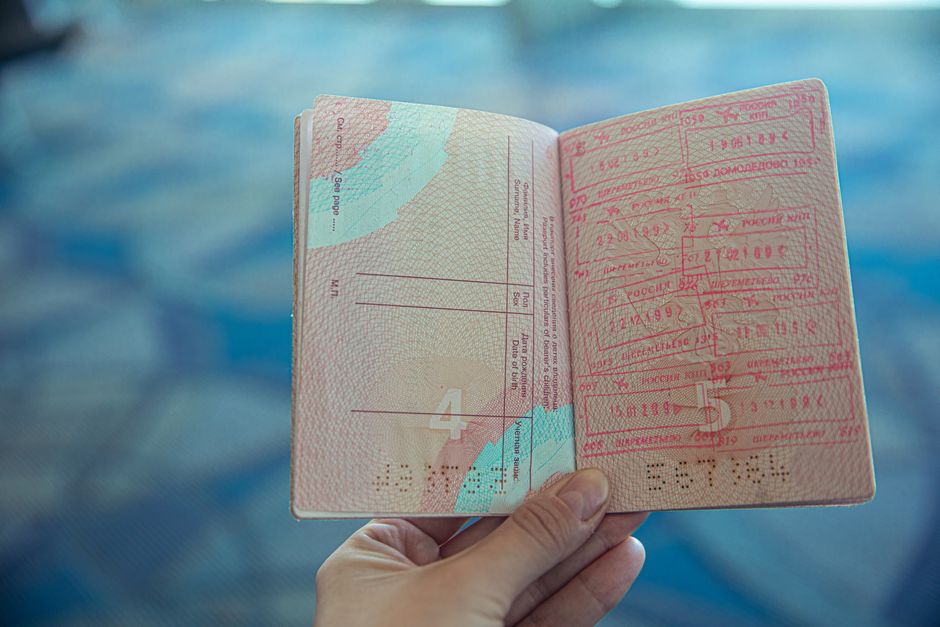
You booked flights to San Salvador. The surf town of El Tunco is calling. Then a friend says, “Wait — do you need a visa for El Salvador?” Panic sets in. You start Googling at 11 PM and find contradictory info on three different government sites.
Here’s the short version: if you hold a passport from the US, Canada, UK, Schengen area, Australia, or Japan, you do not need a visa in advance for tourism stays under 90 days. But that’s not the whole story. The details — how long your passport must be valid, what the entry fee costs, and what gets people denied at the border — are where most travelers slip up.
This breaks down exactly what you need to enter El Salvador in 2026, including the traps that catch even experienced travelers.
Who Can Enter Without a Visa (and Who Cannot)
El Salvador maintains a straightforward visa waiver list. Nationals from 83 countries can enter for tourism or business without applying beforehand. The key list includes:
- United States — up to 90 days
- Canada — up to 90 days
- United Kingdom — up to 90 days
- Schengen area countries — up to 90 days
- Australia, New Zealand, Japan, South Korea — up to 90 days
- Most Latin American countries (Mexico, Argentina, Brazil, Chile, Colombia) — up to 90 days
If your country is not on the waiver list — for example, India, China, South Africa, Nigeria, or the Philippines — you must apply for a visa at an El Salvador embassy before traveling. The process takes 2-4 weeks and requires a completed application form, valid passport with at least 6 months validity, two passport photos, proof of onward travel, bank statements showing sufficient funds, and a letter of invitation or hotel reservation. The visa fee is $30 for single entry, $50 for multiple entries. Approval is not guaranteed.
Real-world example: A traveler from India landed at San Salvador airport in 2026 without a visa, assuming they could get one on arrival like in some other Central American countries. They were denied boarding by the airline at their connecting flight in Miami. The airline is legally required to check visa requirements before boarding — and they do.
Tourist Entry Requirements: The Exact Documents You Need
Even if your passport is visa-free, you still need three things to enter El Salvador. Missing any one can get you sent back to the departure gate.
Passport Validity: 6 Months Is Not Required (But Check This)
Contrary to what many travel forums claim, El Salvador does not require 6 months of passport validity for visa-exempt travelers. The official requirement is that your passport must be valid for the duration of your stay. That means if you plan a 2-week trip, your passport only needs to be valid for those 2 weeks.
However — and this is important — airlines often enforce their own rules. Some carriers, especially budget ones, default to a 6-month validity policy for all international travel. If your passport expires in 3 months, the check-in agent might refuse to issue a boarding pass, even though El Salvador would let you in.
Safe move: If your passport has fewer than 6 months of validity left, renew it before your trip. It saves the argument at the counter.
The Tourist Card (Tarjeta de Turista)
Upon arrival, all visa-exempt visitors must purchase a tourist card. This is a separate document from your passport stamp. The cost is $12 USD — cash only, exact change preferred. You pay at a small counter in the arrivals hall before proceeding to immigration. Keep the carbon copy; you must surrender it when you leave.
Some travelers report that immigration officers occasionally ask for proof of onward travel (return flight or bus ticket out). Have a printed or digital copy handy. It’s not always checked, but when it is, you need it.
Proof of Accommodation
You must provide an address where you’ll stay — a hotel booking confirmation, a hostel reservation, or a letter from a friend you’re visiting. A vague answer like “I’ll find something” triggers extra questioning. Immigration officers at San Salvador’s airport (Monseñor Óscar Arnulfo Romero International Airport) are trained to spot travelers without clear plans, and denial rates have increased since 2026.
What Actually Gets People Denied Entry (Real Border Stories)
El Salvador has tightened entry procedures significantly since the government’s security crackdown began in 2026. The number of denied entries at San Salvador airport rose roughly 40% between 2026 and 2026, according to local migration reports. Here are the three most common reasons:
1. No onward ticket. This is the biggest trap. You fly in with a one-way ticket, planning to travel overland to Honduras or Nicaragua. Immigration sees no return flight and assumes you intend to stay illegally. Always buy a refundable onward ticket or use a service like OnwardTicket.com ($10) to generate a valid reservation.
2. Overstaying a previous visit. El Salvador tracks entry and exit dates carefully. If you overstayed your 90 days on a prior trip — even by one day — the system flags your passport. You may be denied entry and banned for up to 3 years. Overstays are not forgiven at the border.
3. Insufficient funds. Immigration officers can ask to see bank statements or cash. There is no published minimum, but anecdotal reports suggest they look for evidence of at least $500-$1,000 for a short trip. If you look like you’re traveling on a shoestring with no credit card and no cash, expect questions.
Real case: A British traveler in 2026 was denied entry because his passport had a damaged page — a small tear near the spine. The officer deemed it “invalid travel document.” He was put on the next flight back to London. Check your passport condition before you go.
Extending Your Stay: The C4 Visa and Overstay Fines
Want to stay longer than 90 days? You have two options, and one is much smarter than the other.
Option 1: The C4 Visa (Regional Visa)
El Salvador is part of the CA-4 agreement with Guatemala, Honduras, and Nicaragua. Under this treaty, visa-exempt travelers can stay up to 90 days across the entire region. Once those 90 days are used, you must leave the CA-4 countries for at least 72 hours before returning for a new 90-day period.
To extend beyond 90 days within El Salvador itself, you must apply for a visa extension at the Dirección General de Migración y Extranjería in San Salvador. The cost is approximately $30-$50, and the process takes 3-5 business days. You must apply before your 90 days expire. Late applications are rejected.
Option 2: Overstay and Pay the Fine
If you overstay, the fine is $10 per day for the first 30 days, then $20 per day after that. You pay at the airport before departure. Overstays longer than 90 days can result in a ban. This is not a viable long-term strategy.
| Scenario | Cost | Time Required | Risk Level |
|---|---|---|---|
| Tourist entry (90 days) | $12 tourist card | On arrival | None |
| Visa extension (C4) | $30-$50 | 3-5 business days | Low (if applied before expiry) |
| Overstay 1-30 days | $10/day fine | Paid at exit | Moderate (no ban) |
| Overstay 31-90 days | $20/day fine | Paid at exit | High (possible short ban) |
| Overstay >90 days | $20/day + possible deportation | Legal process | Very high (3-year ban likely) |
Entry via Land Borders: Guatemala, Honduras, Nicaragua
Flying into San Salvador is the most common entry point, but many travelers arrive overland from neighboring countries. The rules are the same — visa-free travelers get 90 days — but the process differs.
Land border crossings like El Amatillo (from Honduras) and La Hachadura (from Guatemala) are less formalized than the airport. Immigration officers may ask for the $12 tourist card fee in cash. Some travelers report being asked for an additional “processing fee” of $5-$10. This is unofficial. You can politely refuse, but be prepared for a delay.
Key difference at land borders: The 90-day clock starts from the first entry into any CA-4 country, not from the El Salvador entry. If you entered Guatemala 30 days ago, you have 60 days left for El Salvador, Honduras, and Nicaragua combined. Keep track of your entry date into the region — not just El Salvador.
Common mistake: A traveler enters Guatemala, spends 40 days there, then crosses into El Salvador expecting a fresh 90 days. They get 50 days. When they try to extend, the migration office sees they already used 40 of their 90 regional days. The extension request is denied.
Visa Application Process for Non-Waiver Countries
If your nationality requires a visa, the process is handled entirely through El Salvadoran embassies. There is no e-visa or visa-on-arrival option as of 2026. Here is what you need.
Step-by-Step Application
1. Find your nearest embassy. El Salvador has embassies in Washington DC, London, Madrid, Tokyo, Brasília, and about 30 other cities. Check the Ministry of Foreign Affairs website for the correct jurisdiction.
2. Submit the application in person. Some embassies accept mail-in applications, but most require a personal appearance for biometric data (fingerprints and photo).
3. Provide these documents:
- Valid passport (minimum 6 months validity)
- Completed visa application form (download from embassy website)
- Two passport-sized photos (2×2 inches, white background)
- Proof of onward travel (flight reservation or itinerary)
- Hotel booking or letter of invitation from a host in El Salvador
- Bank statements from the last 3 months showing consistent balance
- Employment letter or proof of income
- Visa fee payment (typically $30-$50, varies by embassy)
Processing time: 10-15 business days on average. Pay for expedited service (extra $20-$30) if you need it in 5 days. Not all embassies offer expedited processing — call ahead.
Failure mode: Incomplete bank statements are the most common rejection reason. The embassy wants to see a steady balance, not a single large deposit right before the application. If your bank balance was $50 for 2 months and then $5,000 appeared last week, expect questions.
Visa Denial: What to Do
If your visa is denied, the embassy will not refund the fee. You can reapply after 90 days, but you must address the reason for denial. Common reasons include insufficient funds, unclear travel purpose, or a previous overstay in any country. A denial from El Salvador does not automatically affect applications to other Central American countries, but it may raise flags.
Alternative route: If you cannot get an El Salvador visa, consider entering Guatemala first (which has slightly looser requirements for some nationalities) and then crossing overland. This does not bypass the visa requirement, but some travelers report that land border officers are less strict with document checks than embassy officers. This is not legal advice — it’s a pattern observed in traveler reports.
Final Take: The One Thing Most Travelers Get Wrong
After tracking El Salvador entry rules for the last three years, one mistake comes up more than any other: assuming the airline knows the rules.
Check-in agents at departure airports use automated systems (Timatic or TravelDoc) to verify travel documents. These systems are updated by governments, but updates lag. In early 2026, Timatic incorrectly flagged El Salvador as requiring 6 months of passport validity for US citizens for three weeks after the rule had changed. Travelers were denied boarding despite having valid documents.
What to do: Print out the official migration policy from the El Salvador government website (Dirección General de Migración y Extranjería) before your trip. If an airline agent gives you trouble, show them the printed policy. It works more often than you’d expect.
The visa rules for El Salvador are not complicated. The real challenge is navigating the gap between what the law says and what the airline enforces. That gap is where trips get cancelled. Close it before you leave home.