 By Laura Caiswell
You land in Hanoi, find a plastic stool, and order pho. Day two: banh mi from a cart. By day four, you realize every traveler you meet is eating the exact same five dishes. You came to Vietnam for its food reputation, but the menu hasn’t changed since you arrived.
Vietnamese food isn’t a monolith. The country stretches over 1,600 kilometers of coastline, and the food in Hanoi tastes nothing like what you get in Saigon. The central region around Hue and Hoi An operates in a completely different flavor universe—spicier, funkier, more texturally complex. Sticking to the greatest-hits list means you’re tasting maybe 10% of what’s actually here.
This guide maps out the regional dishes that define Vietnamese food once you move past the tourist circuit. No pho. No banh mi. Just what locals actually eat for breakfast, lunch, and late-night street snacks across the three major food regions.
The North-South Divide: Why Hanoi and Saigon Don’t Agree on Flavor
Before chasing specific dishes, you need to understand the fundamental split in Vietnamese cooking. Northern food (Hanoi) is subtle, restrained, and relies on balance. Broths are clear. Herbs are minimal. Fish sauce appears as a background note, not a punch.
Southern food (Saigon/Ho Chi Minh City) is loud. Sweeter. Bolder. They load dishes with fresh herbs, raw vegetables, and sugar sneaks into everything—soups, marinades, dipping sauces. The same dish ordered in Hanoi and Saigon will arrive as two completely different meals.
Central Vietnam (Hue, Da Nang, Hoi An) is where things get intense. The imperial history of Hue shaped a cuisine built for royalty—intricate, spicy, heavily influenced by chili and shrimp paste. Portions are smaller, presentation is meticulous, and the heat level jumps significantly.
| Region | Flavor Profile | Staple Ingredients | Signature Dish (Not Pho) |
|---|---|---|---|
| North (Hanoi) | Subtle, balanced, savory | Black pepper, fish sauce (light), lime, minimal herbs | Bun Cha |
| Central (Hue, Hoi An) | Spicy, complex, funky | Chili, shrimp paste (mam tom), lemongrass, turmeric | Bun Bo Hue |
| South (Saigon) | Sweet, bold, herb-heavy | Sugar, coconut milk, Thai basil, bean sprouts, sawtooth herb | Banh Xeo |
This split matters because ordering the wrong dish in the wrong region leads to disappointment. Bun Bo Hue in Hanoi is often a watered-down imitation. Banh Xeo in the north is a sad, thick crepe nothing like the crispy southern version. Eat regionally.
Central Vietnam’s Real Greatest Hits
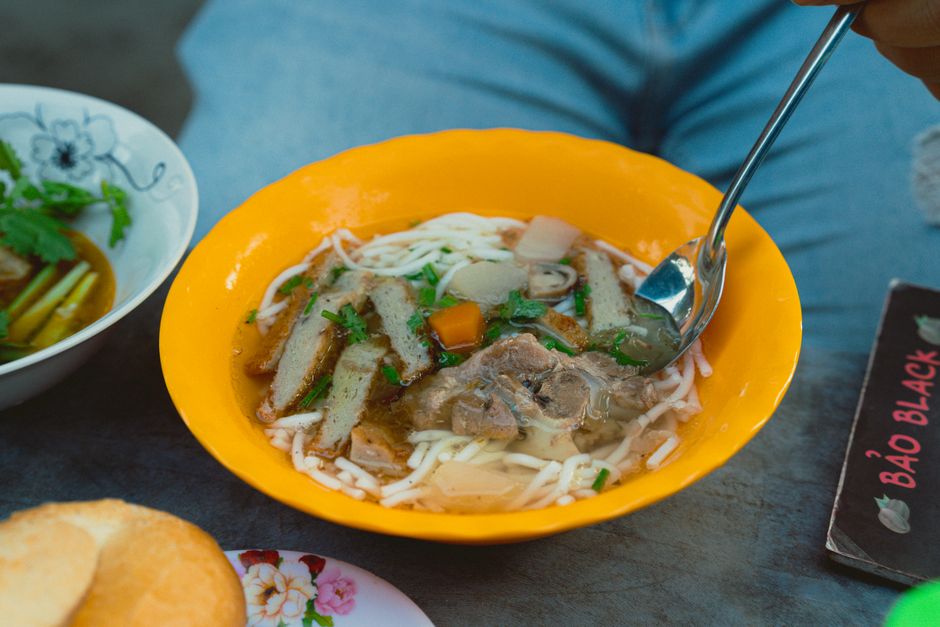
Cao Lau is the dish that defines Hoi An, and you literally cannot get it anywhere else. The noodles use water from a specific ancient well in the city—the Ba Le well—mixed with ash from trees grown on the Cham Islands. The result is a chewy, almost al dente noodle with a faint smoky bitterness. Topped with char siu-style pork slices, crunchy croutons made from the same noodles fried, fresh herbs, and a scant amount of pork broth. No soup. Just enough liquid to coat the noodles.
Every Cao Lau stall in Hoi An sources their noodles from the same three families who’ve made them for generations. The dish costs around 30,000-45,000 VND ($1.20-$1.80). Morning is the only time to eat it—stalls sell out by 10 AM.
Mi Quang is Cao Lau’s louder cousin. Turmeric-yellow rice noodles, a shallow pool of concentrated broth (not a soup—just enough to coat), shrimp, pork, quail eggs, peanuts, and a mountain of fresh herbs. The broth is the key: it’s reduced down from pork and chicken bones with fish sauce and annatto oil until it’s intensely savory. You mix everything together, crush the rice cracker on top, and squeeze lime over the whole mess.
Best version I found: Mi Quang Ba Mua in Da Nang. Around 35,000 VND. They’ve been at it for 40 years and the broth reduction is almost syrupy.
Bun Bo Hue: The Soup That Makes Pho Look Boring
Bun Bo Hue is the central region’s answer to beef noodle soup, and it’s a completely different animal. The broth is built on beef bones and pork knuckles, stained red from annatto oil, and spiked with lemongrass and shrimp paste. It arrives with thick round rice noodles, slices of beef shank, pork knuckle, cubes of congealed pig’s blood, and a handful of shredded banana blossom and mint on the side.
The shrimp paste (mam tom) is non-negotiable. It gives the broth a funky depth that pho’s clean, spiced clarity can’t touch. If you’re squeamish about the blood cubes, just push them aside—but the broth itself is worth the trip to Hue alone.
In Hue, try Bun Bo Hue Ba Tuyet on Nguyen Cong Tru Street. 40,000 VND for a bowl that’ll ruin pho for you.
Northern Dishes Hanoi Locals Actually Queue For
Hanoi’s food scene operates on a strict schedule. Certain dishes appear only at certain hours, and when they’re gone, they’re gone. The city’s real specialty isn’t pho—it’s bun cha, a lunch-only dish of grilled pork patties and pork belly slices swimming in a bowl of diluted fish sauce with vinegar, sugar, and pickled green papaya. You get a plate of cold rice vermicelli and a mountain of herbs on the side. Dip the noodles in the sauce, grab a piece of pork, add herbs, repeat.
Bun Cha Huong Lien on Le Van Huu Street became famous when Anthony Bourdain ate there with Obama in 2016. The Obama combo (bun cha + seafood spring roll + Hanoi beer) still runs about 90,000 VND. It’s good, but the line is absurd. Bun Cha Dac Kim on Hang Manh Street is equally good, less crowded, and they don’t skimp on the patties.
Cha Ca: A One-Dish Restaurant That’s Survived 100+ Years
Cha Ca La Vong on Cha Ca Street serves exactly one dish: turmeric-marinated fish fillets (hemibagrus, a type of catfish) pan-fried tableside with dill and green onions, then eaten over cold rice noodles with peanuts, herbs, and fermented shrimp paste sauce. The restaurant has been operating since 1871. The street is literally named after the dish.
It’s not cheap by Hanoi standards—around 180,000 VND per person—and some travelers complain the portions are small. Fair criticism. But the technique of cooking fish with that much dill at high heat creates something you won’t find replicated elsewhere. Go once, for the history if nothing else.
A better value alternative: Cha Ca Thang Long on Duong Thanh Street. Same dish, half the price, larger portions, and locals actually eat there.
Southern Specialties: Saigon’s Street Food After Dark
Saigon eats late. The city’s street food scene peaks between 6 PM and midnight, and the dish you need to hunt down is banh xeo—a crispy turmeric crepe the size of a dinner plate, folded over shrimp, pork belly, and bean sprouts. You break off pieces with your chopsticks, wrap them in mustard leaf lettuce with herbs, and dip the whole parcel in sweet-sour fish sauce.
The mistake most first-timers make: eating the crepe straight. Don’t. The lettuce wrap is structural—it adds crunch, cools the grease, and the fish sauce ties it together. Without the wrap, banh xeo is just a greasy pancake.
Banh Xeo 46A on Dinh Cong Trang Street is the standard-bearer. 50,000 VND for a massive crepe. The cook, an older woman who’s been flipping these for 30 years, runs the wok with the precision of someone who could do it in her sleep.
Com Tam: The Dish That Explains Saigon
Com tam is broken rice—literally the fractured grains left over from the milling process, once considered poor people’s food. Now it’s Saigon’s defining meal. A plate of broken rice topped with a grilled pork chop marinated in sugar and fish sauce, a wedge of steamed egg meatloaf (cha trung), shredded pork skin (bi), and a fried egg with a runny yolk. Pickled carrots and daikon on the side. Scallion oil drizzled over everything. Fish sauce poured on at the table.
Com Tam Moc on Ly Tu Trong Street in District 1 does it right. 55,000 VND. The pork chop has actual char marks from a charcoal grill—not a gas burner—and the fat renders down so the edges caramelize.
When You Should Skip the Street Stall
I eat street food almost exclusively in Vietnam. But there are moments when the plastic stool isn’t worth it.
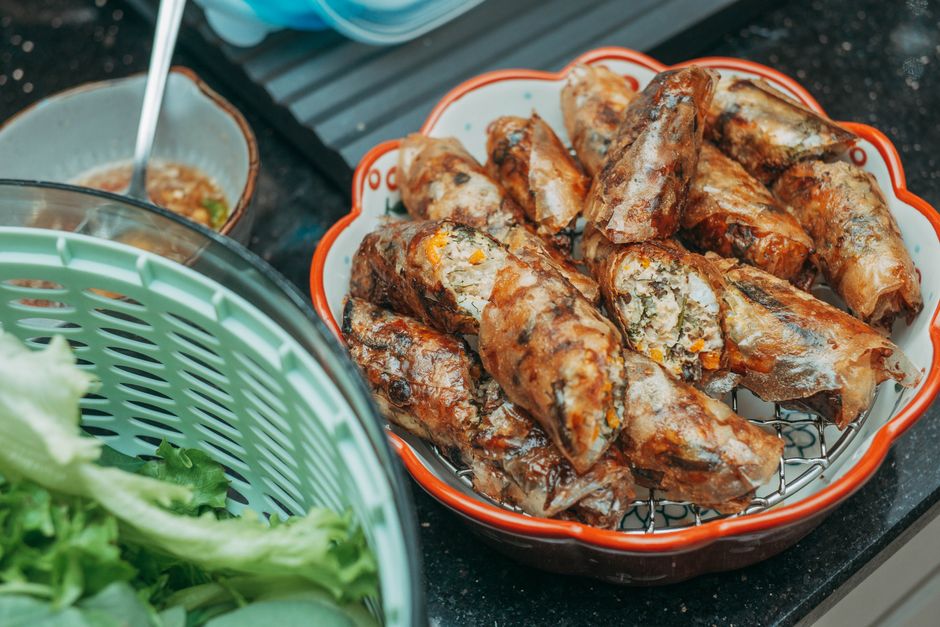
If you’re in a tourist dead zone—the stretch of Bui Vien in Saigon after midnight, the Old Quarter perimeter in Hanoi where menus have photos and English descriptions—the food quality drops off a cliff. These stalls don’t rely on repeat customers. They’re cooking for people who’ll eat there once, and it shows. Bland pho. Dry banh mi. Soggy spring rolls.
Walk three blocks in any direction and find where Vietnamese office workers are queuing. That’s your spot.
Also: if you have a sensitive stomach, the blood cubes in Bun Bo Hue and the raw herbs piled on every table are the two biggest vectors for issues. The herbs are washed in tap water. Up to you whether that’s a dealbreaker. I’ve never gotten sick, but I know people who have. If you’re nervous, stick to cooked dishes like com tam or cha ca for the first few days while your gut adjusts.
The food in Vietnam is as regionally diverse as Italy’s, as technique-driven as Japan’s, and as accessible as Thailand’s—once you know what to look for. Pho and banh mi got you in the door. The dishes above are why you stay.