 By Laura Caiswell
Most travelers assume the biggest coffee mistake in Italy is ordering a cappuccino after 11 a.m. That’s part of it. But the real blunder is walking into a bar and treating it like a Starbucks. You don’t just order. You pay first. You stand. You drink fast. You leave. If you sit down without asking, you’ve just doubled your bill. No one will stop you. They’ll just watch you pay €8 for a €1.10 espresso and say nothing.
This isn’t a list of drink names. It’s a script for walking into any Italian bar and moving through it without friction. The language is simple. The rules are rigid. Learn both.
The Fundamental Rule Tourists Break Every Morning
Milk and coffee exist in separate time zones in Italy. A cappuccino is breakfast. It’s never lunch. It’s never after dinner. Order one at 3 p.m. and the barista will make it without comment, but every Italian in the room will clock you as an outsider. The reasoning isn’t arbitrary. Italians believe milk interferes with digestion after a meal. A cappuccino after pasta is considered almost physically unpleasant to the stomach.
The cutoff is roughly 11 a.m. After that, you drink espresso. If you need something longer, you order a caffè americano. That’s espresso diluted with hot water. It’s not drip coffee. Don’t ask for drip coffee. Most bars don’t have it.
The milk rule has one exception: caffè macchiato. This is espresso “stained” with a drop of foamed milk. It’s acceptable any time of day. The milk volume is minimal. It doesn’t violate the digestion rule. Order this if you can’t face straight espresso at 4 p.m.
What Actually Happens When You Walk Into an Italian Bar
The sequence matters more than the words. Here’s how it works in most bars, especially in cities like Rome, Florence, and Milan.
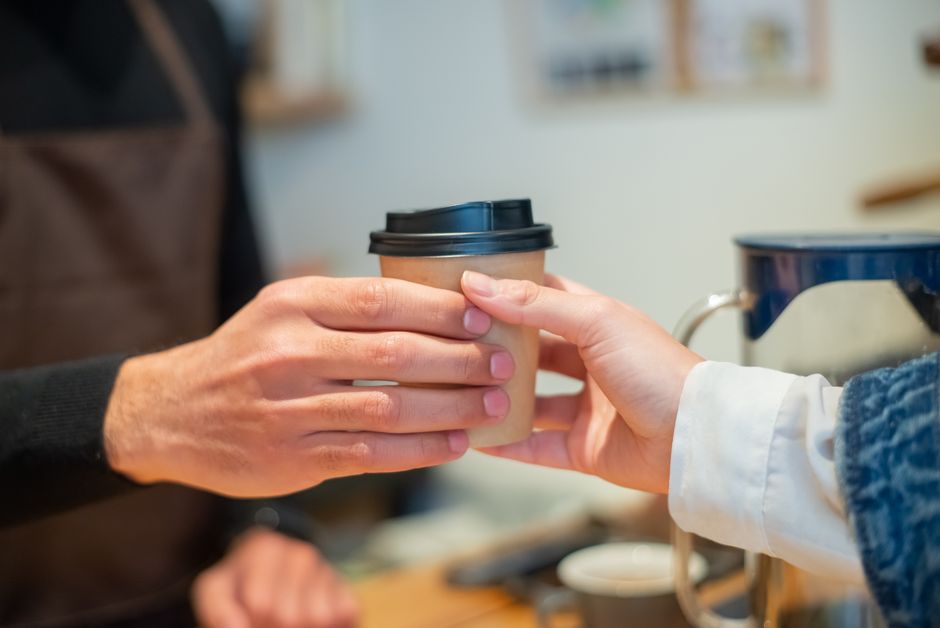
Step one: Pay at the register first. Walk to the cassa, say your order, and pay. You’ll get a receipt. Keep it. Do not lose it. The barista needs it.
Step two: Take the receipt to the bar. Place it on the counter. Say your order again. The barista will make it immediately. You don’t sit. You stand at the counter. Drinking standing up is standard. It’s faster, it’s cheaper, and it’s what locals do.
Step three: Drink fast and leave. An espresso takes 30 seconds to pull and 30 seconds to drink. You’re not lingering. The bar isn’t a café in the French sense. It’s a quick service point.
If you want to sit, you can. But there’s a coperto charge for table service. It can double the price. A €1.10 espresso becomes €2.50 or more just because you sat down. In tourist-heavy spots like Piazza San Marco in Venice, that same espresso might cost €8 at a table. Same coffee. Same quality. You’re paying for the chair.
One more thing: don’t queue like you’re at a DMV. Italian bars operate on controlled chaos. You push forward, make eye contact, and place your receipt on the counter with confidence. Hesitation signals you don’t belong there.
The Exact Phrases, From Basic to “I Live Here”
You don’t need Italian fluency. You need six phrases and the confidence to say them clearly. Pronunciation matters less than you think. Italians will understand your accent. What they notice is whether you know the correct drink name.
| What You Want | What You Say | What You’ll Get | When to Order It |
|---|---|---|---|
| Single espresso | Un caffè, per favore | A single shot of espresso, ~25ml | Any time |
| Double espresso | Un caffè doppio | Double shot, ~50ml | Any time (but not common among locals) |
| Espresso with a drop of milk | Un caffè macchiato | Espresso with a tiny spoon of foamed milk | Any time |
| Long black, American style | Un caffè americano | Espresso diluted with hot water | Any time |
| Cappuccino | Un cappuccino | Espresso with steamed milk and foam | Before 11 a.m. only |
| Latte (the trap drink) | Un latte macchiato | Steamed milk “stained” with espresso | Breakfast only |
| Iced coffee (summer) | Un caffè freddo | Chilled espresso, sometimes pre-sweetened | Summer, any time |
| Espresso with grappa | Un caffè corretto | Espresso “corrected” with a shot of liquor | After dinner, winter |
The single most dangerous word for English speakers: latte. In Italian, latte means milk. Order “un latte” and you’ll receive a glass of cold milk. That’s it. If you want something resembling a latte, order un latte macchiato. That’s steamed milk with a shot of espresso poured through it. It’s still a breakfast drink. Don’t order it after lunch.
For the grammatically inclined: un is masculine, una is feminine. Caffè is masculine, so it’s un caffè. But honestly, if you mess up the gender, no one cares. They’ll still make the drink.
The Price Reality Check: What You Should Actually Pay
Tourists overpay for coffee in Italy not because they’re being scammed, but because they don’t know the baseline. Here’s what coffee costs at a standard bar in a non-tourist neighborhood in 2026.
An espresso at the counter: €1.00 to €1.20. A cappuccino at the counter: €1.30 to €1.80. If you’re paying more than €1.50 for an espresso standing up, you’re in a tourist zone. That’s fine if you’re okay with it. But know the premium you’re paying.
The most expensive coffee in Italy is the one you drink sitting down in a famous piazza. In Piazza Navona in Rome, a cappuccino at a table can run €8 to €12. In Piazza San Marco in Venice, some cafés charge €15 or more. The coffee itself is identical to what you’d get standing at the bar for €1.50. You’re paying for the view, the chair, the live orchestra. If that’s worth it to you, fine. But don’t confuse the price with quality.
A practical rule: walk two blocks from any major monument. Find a bar on a side street. The prices drop by 60 to 70 percent. The coffee is often better because the bar serves locals who return daily.
Regional Orders That Confuse Even Italians
Italy wasn’t a unified country until 1861, and its coffee culture still reflects that. Certain drinks exist only in specific cities. Order them elsewhere and you’ll get a blank stare.
In Naples, order a caffè alla nocciola. It’s espresso blended with hazelnut cream. It’s thick, sweet, and found almost exclusively in Campania. Don’t expect it in Milan. In Puglia, especially around Lecce, you’ll find caffè in ghiaccio con latte di mandorla: espresso poured over ice with almond milk. It’s a summer staple in the south, nearly unknown in the north.
In Trieste, near the Slovenian border, coffee vocabulary shifts entirely. A nero is an espresso. A capo is an espresso with a small amount of milk. A goccia is a macchiato. These terms come from the city’s Austro-Hungarian history and its role as a coffee-importing port. Use them in Trieste and you’ll look like you did your research. Use them in Rome and no one will know what you’re saying.
In Sicily, a granita di caffè con panna is coffee granita with whipped cream, eaten with a spoon and often served with a brioche bun. It’s breakfast. It’s not a drink. Don’t ask for it at 2 p.m.
Common Screw-Ups and How to Recover
You will make mistakes. That’s fine. Italians are generally patient with foreigners who try. But some errors are harder to recover from than others.
Asking for a “latte.” You get a glass of milk. Laugh it off. Say “Scusi, intendevo un latte macchiato.” They’ll make it. Now you know.
Ordering a cappuccino after dinner. The barista will make it. They won’t scold you. But you’ve marked yourself. If you want to blend in, switch to espresso or amaro after meals.
Sitting without asking the price. This is the expensive one. Always ask “Quanto costa al tavolo?” before you sit. If the price is high, stay at the counter. No one will be offended.
Trying to pay with a credit card for a €1 espresso. Many bars have minimums for cards, often €5 or €10. Carry coins. Small transactions are cash territory in most of Italy.
Hovering at the bar without placing your receipt down. The receipt on the counter is the signal that you’ve paid and you’re waiting. Without it, the barista doesn’t know if you’re a paying customer or someone who wandered in. Place it down. Make eye contact. Say your order.